BEFORE TABS
The church key
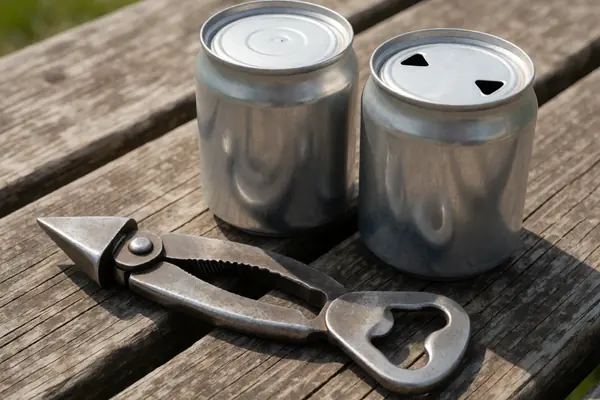
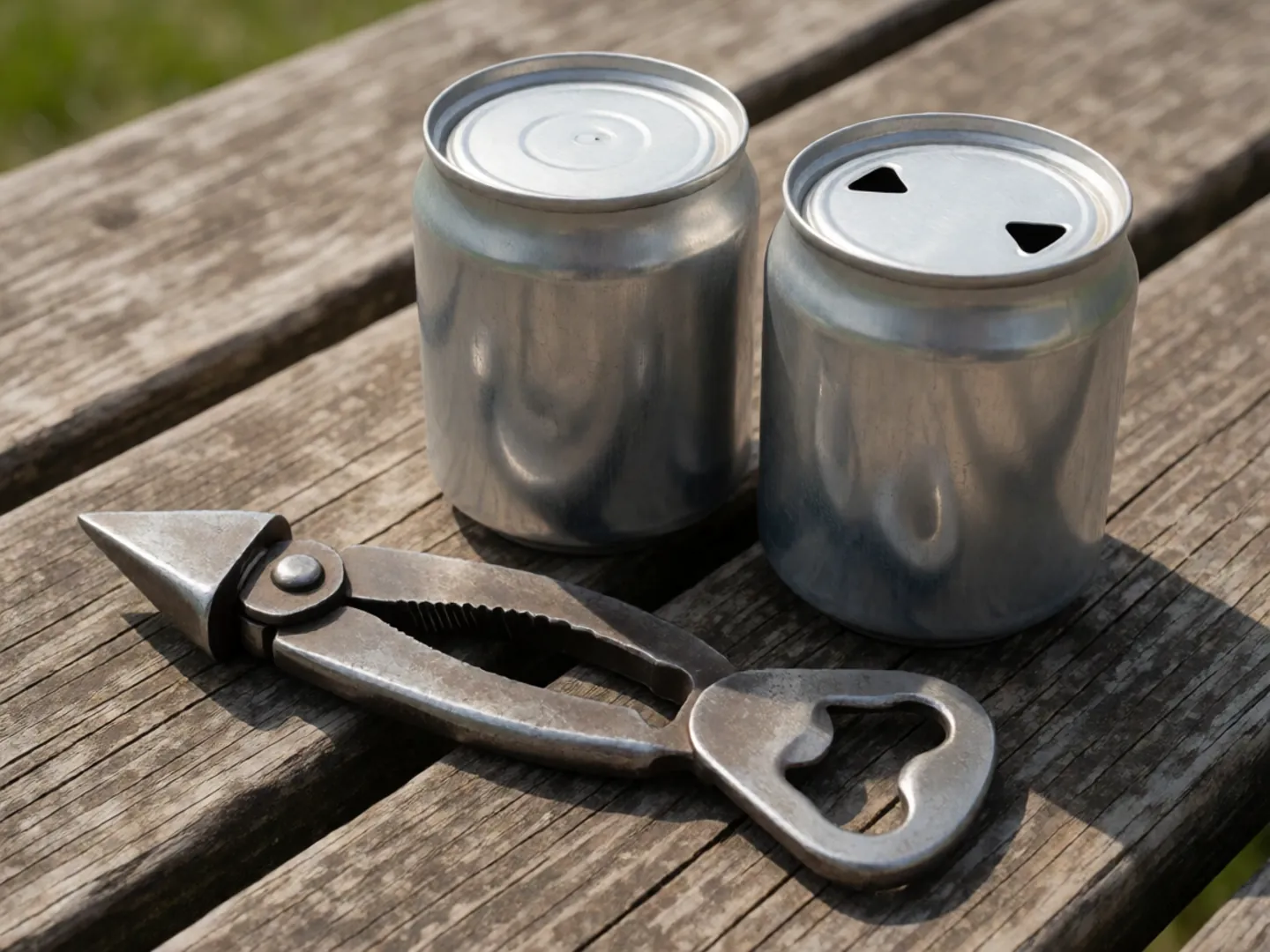
Drinkers used a can piercer to punch two triangular holes in the top, one for drinking and one to let air in.
Compare the openers tabduo
EVERYDAY DESIGN, EXPLAINED
A small lever with a long, messy history.
PSSHHT one rivet, one lever
1959 Year of the picnic that started it
Before tabs, a can of beer needed a tool and two holes. The ring pull of the 1960s made cans self-opening but left sharp rings everywhere. The stay-on tab patented in 1976 fixed that by keeping the lever, and the flap, attached to the can.
THE SHORT ANSWER
First a tool, then a tab that came off,
then a tab that stays on.
BEFORE TABS
Drinkers used a can piercer to punch two triangular holes in the top, one for drinking and one to let air in.
Compare the openersTHE RING PULL
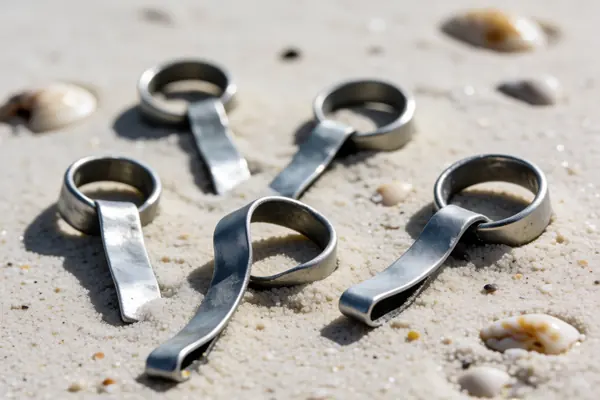
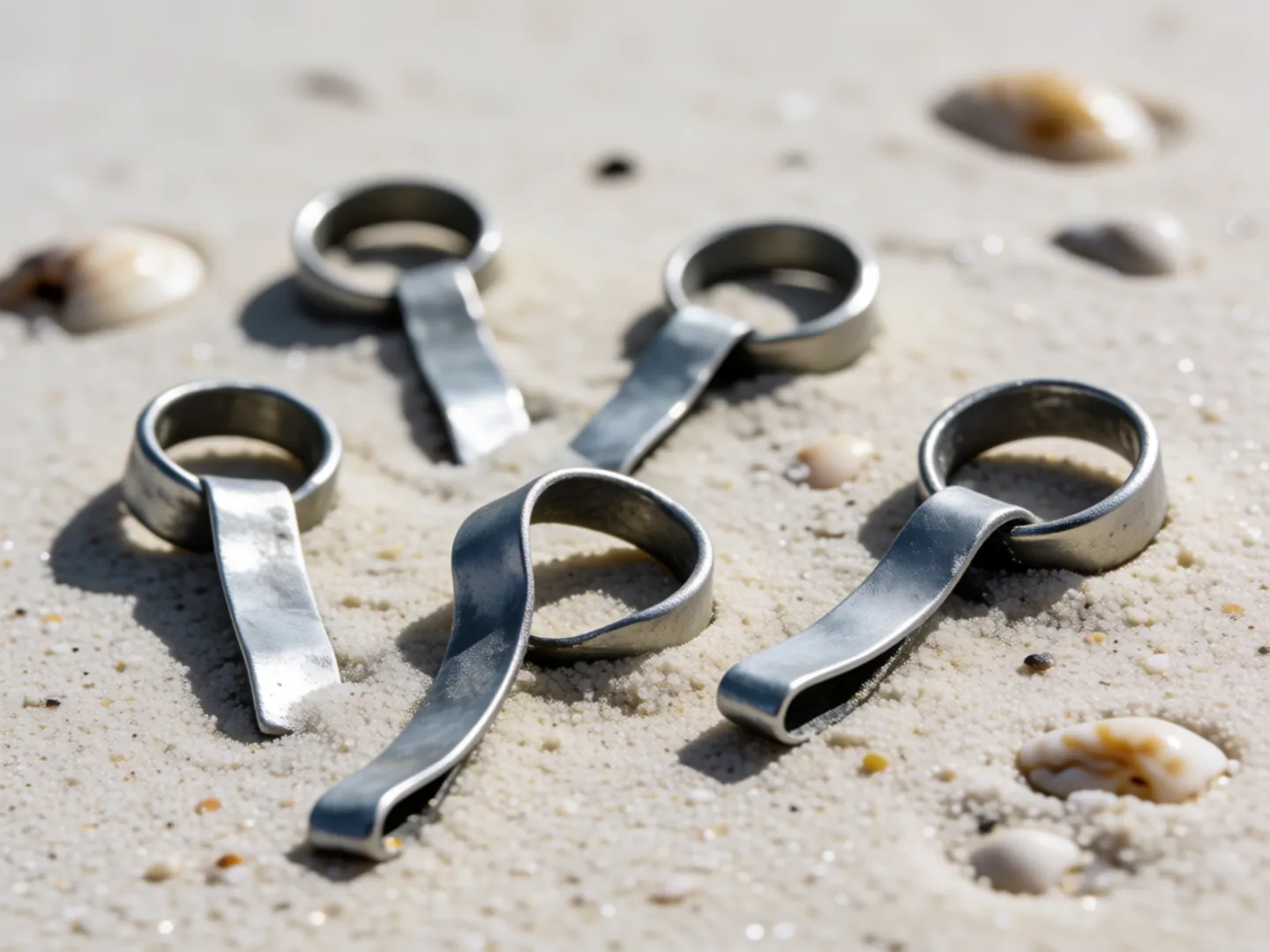
From the early 1960s a riveted tab turned into a lever that tore out a pre-scored strip. It came right off, and was often dropped.
See the numbersTHE STAY-ON TAB
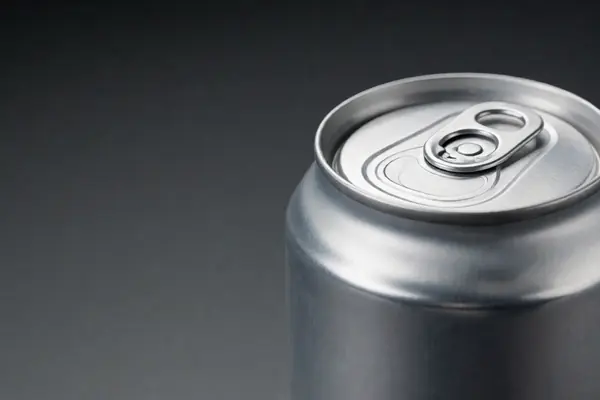
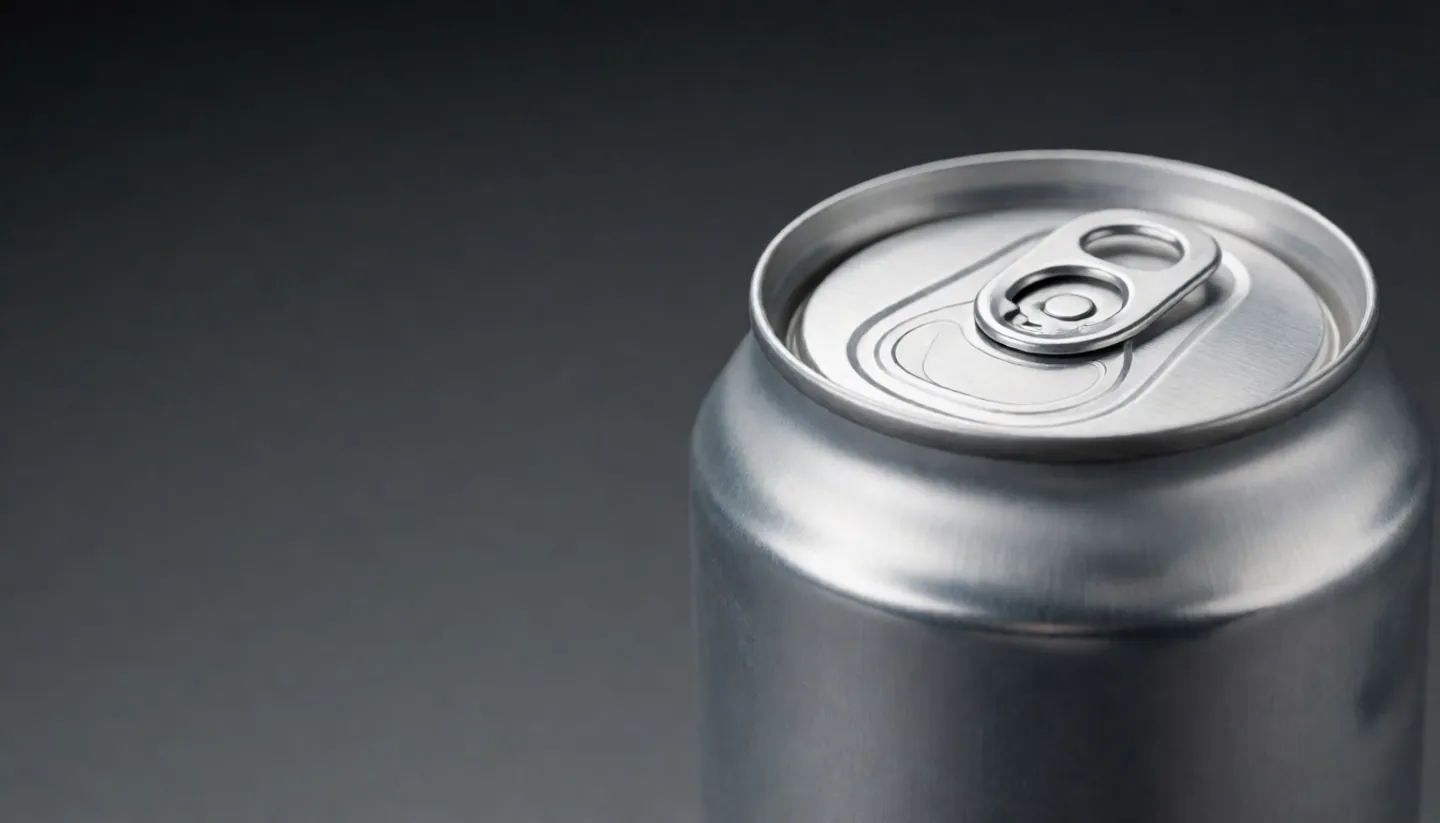
The 1976 design pushes a scored panel into the can, where it stays attached at a hinge, and the tab stays on too.
How it worksCOMPARE THE OPENERS
Pick an opener to see how it worked. The bar shows how much trouble it caused, from litter to cut fingers, according to the sources.
Based on Smithsonian Magazine and the Wikipedia history of the beverage can.
INSIDE THE TOP OF A CAN
The modern can end is a small piece of engineering. These are the parts the patents and histories describe.
A small metal pin fixes the tab to the lid, so it can pivot but not come off.
A pre-scored curve outlines the panel that will open.
Lifting the back of the tab presses its front down on the panel, which snaps open.
Part of the score is left uncut, so the panel bends into the can and stays attached.
TWO NUMBERS WORTH KNOWING
When the idea came,
and how long the fix took.
1959
Year of the picnic that started it
Dayton toolmaker Ermal Fraze forgot his church key and had to open a can on his car. He set out to build an opener into the can itself.
THE SPARK · SMITHSONIAN
1976
Year the stay-on tab patent was granted
Engineer Daniel F. Cudzik's easy-open wall was granted on 6 July 1976. Wikipedia notes the stay-tab has been characteristic of most drinking cans since the mid-1980s.
THE FIX · US PATENT 3,967,752
Fraze himself told an interviewer in 1963 that he had not invented the easy-open can end, which people had worked on since 1800; what he developed was a way of attaching a tab to the can top.
WHY THE RING PULL HAD TO GO
Smithsonian Magazine reports that through the 1960s and 70s detached tabs littered streets, pavements and beaches. Some bartenders disliked the sharp edge so much that they opened cans from the bottom instead.
Worse, people often dropped the ring into the can before drinking, as some environmentalists had advised to cut litter, and swallowed tabs became a medical problem. Wikipedia notes that a 1976 medical journal reported children swallowing tabs that had broken off.
Questions
A small double-ended tool: one end is triangular for piercing cans, the other rounded for opening bottles. In the 1950s drinkers used it to punch two holes in a can.
Smithsonian Magazine credits Ermal Fraze of Dayton, Ohio, who after a 1959 picnic developed a riveted tab that worked as a lever. Ring pull is the British English name for the pull-tab.
Engineer Daniel F. Cudzik. His patents for an easy-open wall, US 3,967,752 and 3,967,753, were granted on 6 July 1976.
Because it is riveted to the lid and only pushes the scored panel inwards. The panel stays attached at an unscored hinge, so nothing comes away.
Yes. Wikipedia notes full-top pull tabs are still used on some soup, pet food, tennis ball and nut cans.
Smithsonian Magazine says the first tin-coated iron cans, patented by Peter Durand in 1810, were opened with a chisel and hammer. Ezra J. Warner patented the first can opener in 1858, a blade that sawed round the rim, and Charles A. Bunker patented the modern can opener in 1926. Both removed the whole lid, which suits beans but not a drink.
Yes. Smithsonian Magazine reports that Fraze patented his own version, the Easy-Open Ecology End, in 1977, the year after Daniel F. Cudzik of Reynolds Metal Co. patented the Stay-On-Tab. A patent battle followed and was ultimately decided in Cudzik's favour.
Smithsonian Magazine quotes Peter Liebhold, curator emeritus at the National Museum of American History: cans had historically been made of steel, aluminium was taking over the can industry, and it is easier to make a pop-top from aluminium than from steel. Fraze sold his first design to Alcoa, which put it on Iron City Beer cans.
Updated
ABOUT THIS NAME
tabduo.com is part of the DoodleSale portfolio. It isn't in an auction right now, but you can ask about leasing it.